
News & Blog
Meet Astracia and her work with the One Health Approach in Suriname

- Published on
🌳 Meet Astracia Warner, PhD candidate within the ABC Futures program:
Conservation and public health, two fields that are more naturally connected than they might first appear. With experience in both environmental sciences and public health in Suriname, Astracia has seen firsthand how human and environmental health are interlinked, yet often treated as separate entities. As a lecturer, she now encourages the new generation of “change makers” in her classroom to view public health through this broader lens. However, that her journey would lead to a PhD within a conservation research program was something she never would have guessed.
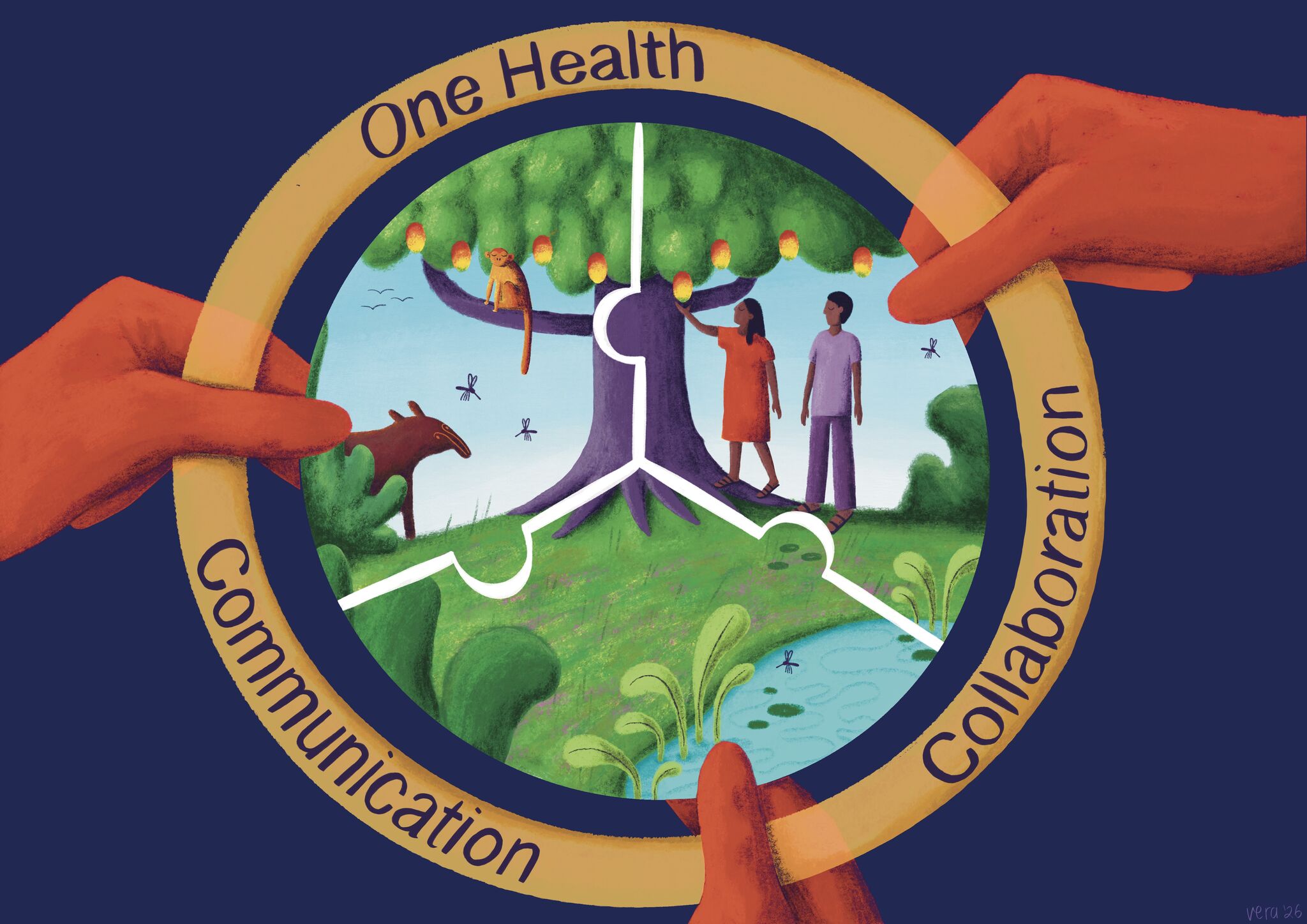
Astracia works from a One Health perspective, which recognizes that human, animal, and environmental health are deeply interconnected. Instead of addressing these as isolated issues, One Health offers a more holistic approach. For example, healthy ecosystems have a disease prevention function; damaging them does not only harm the environment and wildlife, but also poses risks to human health.
For her PhD, Astracia focuses on mosquito-borne diseases such as yellow fever and dengue in relation to socio ecological changes in indigenous communities. Research shows that outbreaks of these mosquito-borne illnesses are linked to deforestation, providing even more reason to bring a public health perspective into conservation. To do this, she will collaborate with Indigenous communities in the Surinamese rainforest to co-create the research. The aim of the project is to share knowledge: she hopes to learn about traditional knowledge on disease prevention and in return will provide communities with information about zoonotic risks in their territories.
Through this work, Astracia is determined to help bridge the gap between environmental management, public health and social science, and sees an important role for conservation organizations. Conservation work is often done in remote areas where health services and data are limited and can therefore provide valuable environmental information to improve disease monitoring and prevention. With more organizations adding One Health to the conservation agenda, Astracia sees exciting opportunities to push the integration of environmental management and public health.
As conservation is still a relatively new field for Astracia, she challenges herself to step outside her usual ways of thinking and working. By taking on this challenge, Astracia believes her work will not only benefit local communities and environmental organizations in their advocacy, but also inform future policy and risk assessments, contribute to UN agendas, and inspire and educate the next generation of change agents.
To keep posted, follow us on LinkedIn: ABC Futures
RELATED NEWS & BLOG
- #Conservation, #IndigenousTerritories, #Mozambique
- #Biodiversity, #Conservation, #Mexico
- #Conservation, #IndigenousTerritories, #Suriname