Suriname hosts high biodiversity with many vulnerable wildlife species. Managing this biodiversity requires balancing ecological, social, and economic needs, especially near Indigenous villages.
Indigenous and local communities rely on wildlife for subsistence (Van Kuijk et al, 2022). Mining and forest concessions have increased hunting pressure. Wildlife populations are increasingly threatened by overexploitation. Little is known about what makes territories resilient under such pressures (Ouboter, 2023). Although legal frameworks exist, enforcement capacity remains limited (Djosetro & Behagel, 2024).
Research focus
The project studies wildlife populations and hunting practices. It examines bushmeat use and external pressures on ecosystems. The goal is to develop sustainable livelihood strategies for communities. These strategies aim to protect and restore wildlife populations.
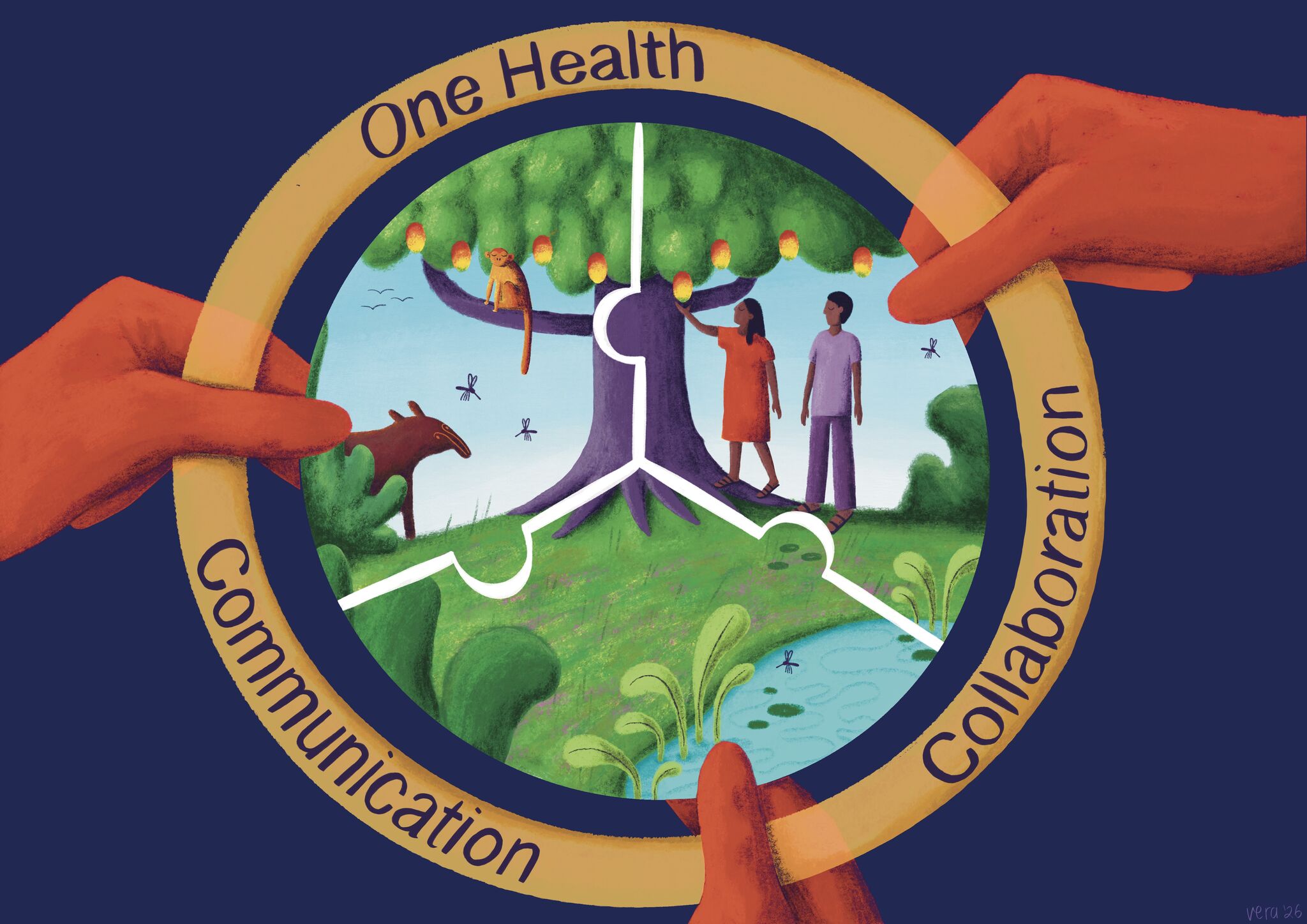
The project adopts a One Health perspective. It explores links between biodiversity, human health, and animal health. Many emerging diseases are zoonotic and linked to ecosystem disruption. Biodiversity loss may increase disease spillover risks to people and wildlife.
RESEARCH QUESTIONS
RQ1:
What is the current state of biodiversity in the selected areas, and which species are most threatened by hunting and other human driven activities?
RQ2:
Which ecosystem services are utilized and valued by the indigenous communities in the selected areas and how does this influence their interaction with the local biodiversity?
RQ3:
How does environmental degradation and biodiversity loss contribute to outbreak of existing and new zoonotic diseases?
RQ4:
How can a one health approach be applied together with local communities, health authorities and other relevant actors?
Around Gorongosa National Park, Filipa Oitavén researches how conservation organizations work with local communities — and how local knowledge and leadership can shape conservation.
Astracia Warner works from a One Health perspective, researching mosquito-borne diseases and socio-ecological change with Indigenous communities in the Surinamese rainforest.
José María Casanova Celis expands ABC Futures to a fifth research country. His PhD applies a political ecology lens to power relations in protected area governance.
Around Gorongosa National Park, Filipa Oitavén researches how conservation organizations work with local communities — and how local knowledge and leadership can shape conservation.
Astracia Warner works from a One Health perspective, researching mosquito-borne diseases and socio-ecological change with Indigenous communities in the Surinamese rainforest.
José María Casanova Celis expands ABC Futures to a fifth research country. His PhD applies a political ecology lens to power relations in protected area governance.