
News & Blog
Shaping the future of conservation research together: How the Common Ground project is building fairer, more inclusive practices for conservation research on Indigenous and community lands

Shaping the future of conservation research together
How the Common Ground project is building fairer, more inclusive practices for conservation research on Indigenous and community lands
Conservation research has long taken place on Indigenous and community lands,but too rarely have the people living on those lands had a meaningful say in how that research is done. The Common Ground project aims to change that.
Following the adoption of the Kunming-Montreal Global Biodiversity Framework in 2022, the call for rights-based, inclusive conservation has never been clearer. The Framework explicitly requires that implementation be grounded in both traditional knowledge and scientific evidence, and that it respect human rights throughout. For conservation researchers working on Indigenous and community lands, this raises important questions about roles, responsibilities, and who gets to shape the research agenda.
- By Dr. Bas Verschuuren
- Published on
From principles to practice
In 2024, our team co-led an interdisciplinary group of conservation scientists through a two-year deliberation process, resulting in a peer-reviewed set of draft good practice principles for participatory conservation research. But draft principles are only a starting point. The next step, and the heart of the Common Ground project, is bringing those principles into dialogue with the people they affect most: Indigenous and community representatives themselves.
We are exploring good practice across three different levels of community involvement in conservation research:
For example, a study of a particular plant or animal species, where community members may be minimally involved but whose land and knowledge may still be implicated.
Such as the ABC Futures project’s work on the state and trajectory of communal natural resources, research led by outside researchers but relevant to local needs.
Where Indigenous and local communities take the lead and external researchers provide technical support, as seen in the Transformative Pathways project’s work on traditional knowledge and agroecology.
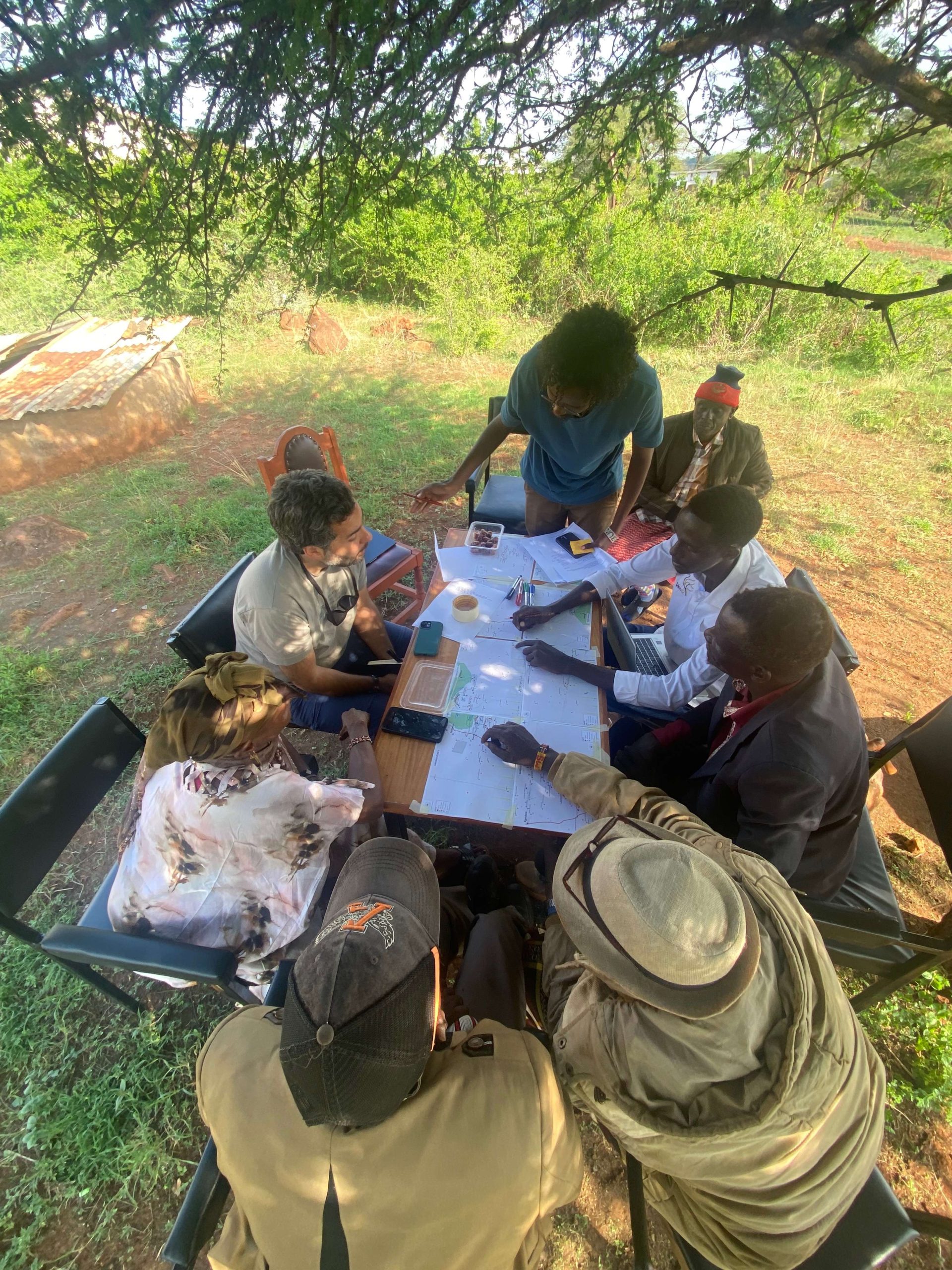
A deliberative workshop in 2026
To develop joint recommendations, we are inviting 25–30 key individuals, pairing Indigenous and community representatives with the researchers who work alongside them, to a two-day deliberative workshop in the Netherlands, planned for around 5–6 July 2026. The workshop will be preceded by a series of online sessions to build shared understanding of the initiative’s goals and process. Throughout, we will carefully follow free, prior, informed consent (FPIC) principles.
The resulting guidance will speak to both researchers and communities, offering practical recommendations that are genuinely two-way.
Beyond the workshop
The outputs of Common Ground extend well beyond a single event. Subject to consultation with participants, we plan to contribute to a peer-reviewed publication, a chapter in the forthcoming second edition of Conducting Research in Conservation: Social Science Methods and Practice, and a code of ethics for conservation organisations. We also plan a session for Wageningen University staff and students, and, if co-funding allows, a series of short documentary-style videos featuring academic-community pairs sharing the story of their collaboration.
We are already in dialogue with partners including the ICCA Consortium, the Forest Peoples Programme, and the ABC Futures project, and are expanding our network to include organisations such as IIED, IUCN, and the Society for Conservation Biology.
Get involved
Common Ground is built on the belief that good conservation research must be shaped by those who live it. If you are an Indigenous or community representative, a conservation researcher, or an organisation working at this interface, we would love to hear from you.
Funding organization: Wageningen Biodiversity Initiative.
RELATED NEWS & BLOG
- #Conservation, #IndigenousTerritories, #Mozambique
- #Biodiversity, #IndigenousTerritories, #Suriname
- #Biodiversity, #Conservation, #Mexico
- #Conservation, #IndigenousTerritories, #Mozambique
- #Biodiversity, #IndigenousTerritories, #Suriname
- #Biodiversity, #Conservation, #Mexico